
February 2, 2026
Hardcoded workflows represent the lowest level of autonomy. In this model, agents follow predefined scripts, rules, and deterministic logic. Every action is explicitly programmed, and the agent has little to no flexibility in decision-making.
Key characteristics:
Use cases:
Hardcoded workflows provide strong control but lack adaptability and intelligence.
Constrained FSM workflows introduce controlled autonomy. In this model, agents operate within predefined states and transition rules but can make decisions within those constraints based on context and conditions.
Key characteristics:
Use cases:
FSM-based orchestration is widely used in enterprise environments because it balances autonomy with governance and predictability.
Fully conversational autonomous agents represent the highest level of autonomy. These agents rely primarily on model reasoning and interactions to determine actions, plans, and tool usage dynamically.
Key characteristics:
Use cases:
While highly powerful, fully autonomous agents introduce risks related to security, compliance, and reliability, requiring strong monitoring and governance frameworks.
Organizations must choose autonomy levels based on several factors:
Many enterprises adopt a hybrid approach, starting with constrained orchestration and gradually increasing autonomy as trust and controls mature.
Common orchestration patterns include:
Effective orchestration ensures that agentic systems remain reliable, secure, and aligned with organizational goals.
As autonomy increases, agentic AI systems can:
However, higher autonomy also requires robust governance, security, and risk management strategies.
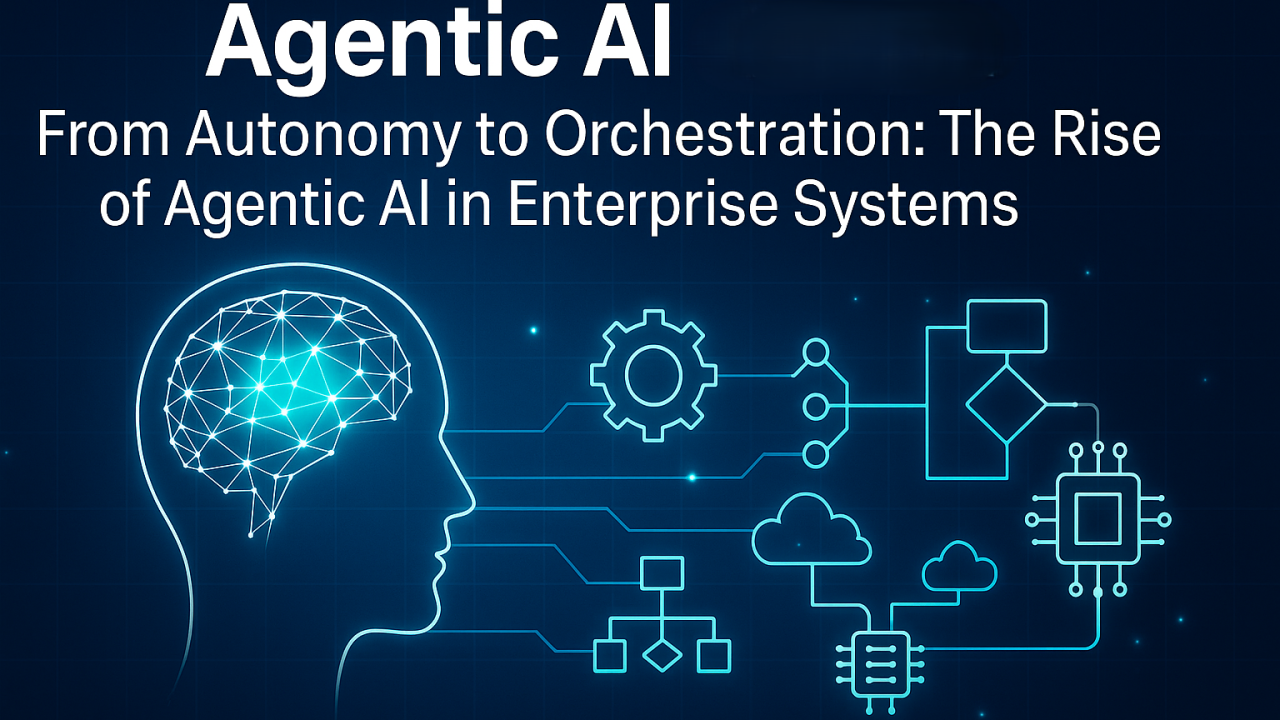
Levels of autonomy and orchestration define how agentic AI systems are designed, controlled, and deployed. From hardcoded workflows to fully conversational autonomous agents, each level offers trade-offs between control, flexibility, and intelligence.
For a comprehensive overview of agentic AI capabilities, enterprise adoption, frameworks, and technical foundations, refer to the blog “Agentic Artificial Intelligence Systems.”
Related Links:
Role of machine learning and reinforcement learning
Impact of Large Language Models (LLMs)
Memory and statefulness in Agentic AI system
Action and Tool Use in Agentic AI Systems


