
February 16, 2026
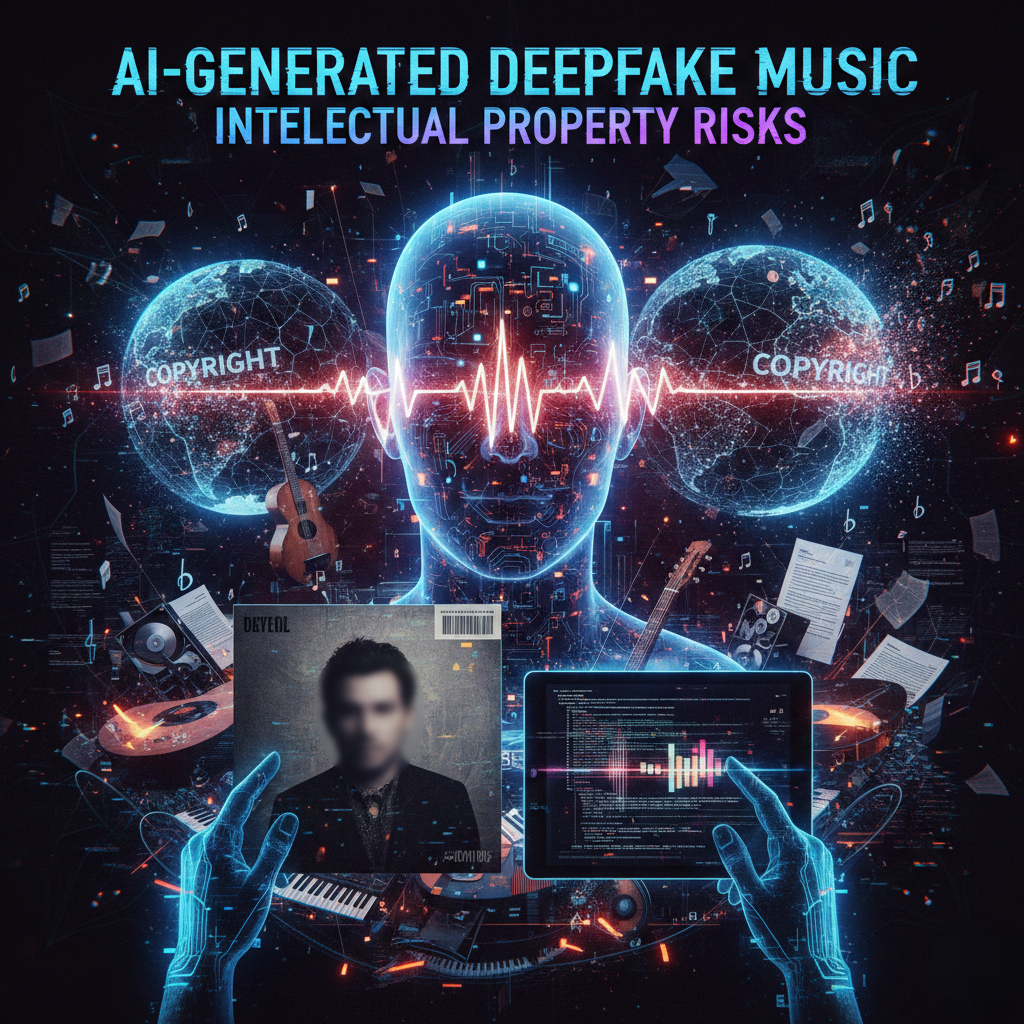
AI-generated deepfake music refers to synthetic songs created using machine learning models trained on existing music catalogs and vocal recordings. These systems can replicate an artist’s voice, style, lyrics, and composition patterns, producing tracks that sound indistinguishable from real recordings.
Popular AI tools use deep learning techniques such as neural networks, diffusion models, and generative adversarial networks (GANs) to synthesize vocals and instrumentals. While legitimate use cases include music production assistance and creative experimentation, malicious or unauthorized use can lead to copyright infringement and identity misuse.
Many AI models are trained on copyrighted music without proper licensing. Generated tracks may contain derivative elements that violate copyright laws, exposing developers and platforms to legal action.
Deepfake vocals replicate an artist’s voice without consent, raising issues related to personality rights, publicity rights, and moral rights.
Fake tracks uploaded to streaming platforms can generate streams and revenue, diverting income from legitimate artists and labels.
AI-generated songs released under misleading names can confuse fans and damage an artist’s brand identity and artistic integrity.
Existing copyright frameworks struggle to address AI-generated content, creating uncertainty around ownership, liability, and enforcement.
Streaming platforms face significant difficulties in detecting and removing AI-generated deepfake music:
These challenges highlight the need for automated detection and regulatory frameworks to manage AI-generated content effectively.
AI watermarking embeds invisible digital signatures into generated content, allowing platforms and rights holders to identify AI-created tracks.
Key benefits include:
Content provenance frameworks, such as cryptographic metadata tagging, can help verify whether a track was generated by AI or created by a human artist.
A major issue is the unauthorized use of copyrighted music for training AI models. Licensing frameworks should ensure:
Such frameworks create a legal foundation for ethical AI music generation and reduce litigation risks.
AI-powered detection systems can analyze audio patterns to identify synthetic vocals and compositions.
Detection techniques include:
Integrating these tools into streaming platforms enables automatic identification and removal of infringing content.
Governments and regulatory bodies must update copyright and AI laws to address synthetic media.
Key regulatory measures may include:
Clear regulations help protect artists while enabling responsible AI innovation.
Artists risk losing control over their creative identity and revenue streams. Deepfake tracks can dilute brand value and mislead fans.
Labels face enforcement costs, legal disputes, and brand protection challenges as AI-generated content proliferates.
Developers must navigate copyright compliance, licensing obligations, and ethical considerations when building generative music tools.
Platforms must invest in detection technology, content moderation systems, and compliance processes to prevent copyright violations.
Organizations involved in AI music generation and distribution should adopt the following best practices:
The rise of generative AI will continue to blur the line between human-created and machine-generated art. Without strong governance, the music industry could face widespread copyright violations and loss of creative control. However, emerging technologies such as watermarking, blockchain-based rights management, and AI detection tools offer promising solutions.
Regulators are increasingly focusing on AI-generated content, and global frameworks are expected to evolve to protect artists and intellectual property rights. Organizations that proactively adopt these safeguards will be better positioned to navigate the evolving AI-driven music ecosystem.
For a comprehensive overview of AI security threats and governance strategies, refer to AI Security Threats and Real-World Exploits in 2026: Risks, Vulnerabilities, and Mitigation Strategies, which covers technical, legal, and operational risks across AI domains.
AI-generated deepfake music represents a significant intellectual property challenge for artists, record labels, and streaming platforms. Unauthorized synthetic tracks can infringe copyrights, divert revenue, and damage reputations. By implementing watermarking, establishing licensing frameworks, deploying detection tools, and enforcing regulatory standards, the industry can mitigate these risks while fostering responsible AI-driven creativity.
As generative AI continues to reshape music production, strong IP governance and security measures will be essential to protect creative industries and maintain trust in digital content ecosystems.


