Introduction
Imagine logging into work and finding not just your human teammates, but also AI colleagues—specialized digital agents that brainstorm, manage tasks, and collaborate with each other. This is no longer science fiction; it’s the reality of multi-agent systems (MAS). These digital teams are set to transform how we work, making workplaces smarter, faster, and more efficient.
What Are Multi-Agent Systems?
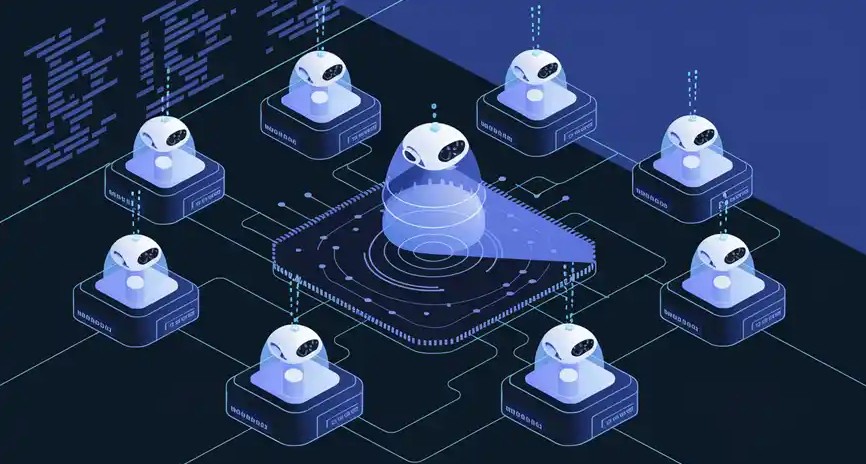
A multi-agent system is a group of autonomous AI agents that:
- Communicate with each other.
- Share information.
- Work together to solve complex problems.
Think of it as a digital office team where each agent plays a role—one handles emails, another analyzes data, another tracks projects—and they coordinate just like humans do.
Why Are They Important for the Workplace?
- Collaboration at Scale – Instead of one AI tool doing everything, specialized agents can focus on specific tasks and work together seamlessly.
- 24/7 Productivity – Digital agents don’t need breaks; they keep projects moving even when human teams are offline.
- Reduced Human Burden – Agents take care of repetitive and time-consuming tasks, freeing employees for strategy and creativity.
Real-World Examples
- Software Development: One AI agent writes code, another tests it, and another updates documentation.
- Marketing Teams: An agent researches trends, another drafts copy, and a third optimizes ads.
- Customer Service: Agents can collaborate to answer queries, escalate issues, and track satisfaction scores.
Challenges and Considerations
- Trust & Accountability – Who takes responsibility if an AI agent makes a mistake?
- Coordination Complexity – More agents mean more chances of miscommunication if not designed well.
- Human-AI Collaboration – Finding the right balance between digital colleagues and human workers is key.
The Future of Work with Digital Teams
Multi-agent systems could soon become standard in organizations:
- Companies may hire AI teammates alongside humans.
- Workflows will be managed by hybrid teams.
- Humans will shift from doing tasks to overseeing and guiding digital colleagues.
Conclusion
Multi-agent systems are not just a tech trend—they represent the next stage of workplace evolution. Instead of replacing humans, these collaborative AI colleagues will work with us, reshaping roles, boosting productivity, and unlocking new levels of innovation.
The question isn’t whether we’ll work with AI teams—it’s how ready we are to welcome them as our new colleagues.