
January 10, 2026
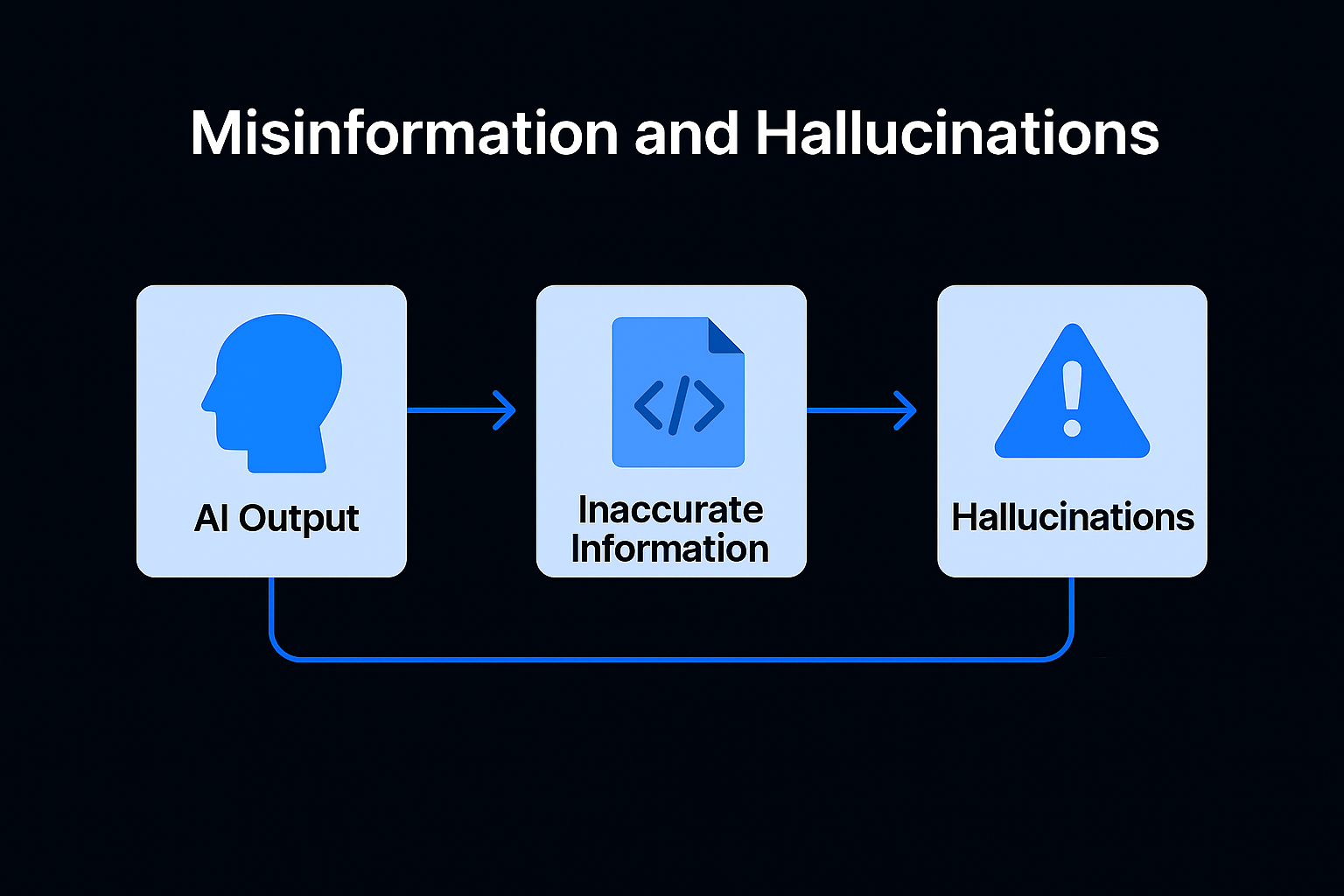
In the earlier days of 2023 and 2024, AI "hallucinations" were often seen as a quirky side effect—a chatbot claiming it was sentient or suggesting a recipe for "glue-based pizza." But by 2026, as AI has moved from a playground toy to the core of enterprise infrastructure, these errors have been reclassified as a high-tier security risk.
LLM09: Misinformation is the 2025/2026 evolution of the original "Overreliance" category in our AI Security Framework. It describes the phenomenon where an LLM generates false, misleading, or entirely fabricated information and presents it with the unwavering confidence of an expert. When your business depends on these outputs for legal, medical, or technical decisions, a hallucination isn't just a glitch—it’s a liability.
The fundamental architecture of an LLM is probabilistic, not factual. It is designed to predict the next most likely token, not to consult a database of truth. This leads to several distinct types of misinformation:
In 2026, "I didn't know the AI was lying" is no longer a valid legal defense.
To move from "probabilistic guessing" to "deterministic factuality," 2026 leaders use a multi-layered verification stack.
The most effective way to stop a hallucination is to take away the model's need to "guess."
Don't trust a single model. Use two.
In 2026, "Vibe-checking" is replaced by automated metrics. Tools like RAGAS or TruLens provide a numerical score for:
Use "Self-Correction" loops. If a model generates a piece of code, use an automated linter or compiler to check it. If it generates a chemical formula, check it against a known database. This shifts the burden of truth from the LLM to a deterministic system.
Technique Phase. Impact
RAG Grounding Inference Maximum: Provides the factual "source of truth."
Chain-of-Thought Prompting High: Forces the model to "show its work."
Critic Models Post-Processing Medium: Catches hallucinations before the user sees them.
Human-in-the-Loop Workflow Critical: Final gatekeeper for high-stakes decisions.
A new standard emerging in 2026 is the Truth Anchor. This is a cryptographically signed piece of metadata attached to an AI's output that points back to the specific source document used to generate the answer. If the AI cannot generate a "Truth Anchor," the system flags the response as "Unverified" or "Low Confidence."
Expert Tip: Never allow an LLM to generate "free-form" URLs. Instead, have the LLM return a Document ID, and have your application's backend look up the actual, verified URL for the user.
The "intelligence" of an LLM is a double-edged sword. It is smart enough to solve your problems, but it is also "smart" enough to make up a solution that doesn't exist. By implementing RAG grounding, Critic-based validation, and Faithfulness metrics, you transform a "confident liar" into a reliable assistant.
Managing misinformation is a core requirement of the NIST AI RMF and the OWASP Top 10. Once you have ensured your AI is truthful, the final step in our series is to protect your resources from the silent killer of AI budgets: Unbounded Consumption.


