
February 4, 2026
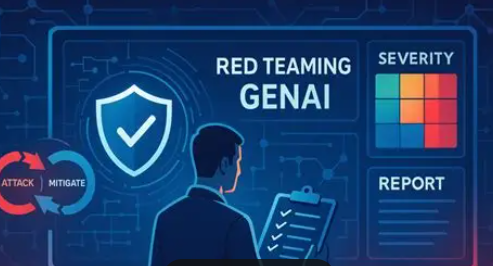
The term "red teaming" originated in military and cybersecurity contexts. It involves a group (the "red team") simulating adversarial behavior to test defenses, expose weaknesses, and improve resilience. In traditional cybersecurity, red teams mimic hackers to breach networks, revealing vulnerabilities before real threats exploit them.
In the AI domain, this concept has evolved to address the unique challenges of generative models like large language models (LLMs), image generators, and multimodal systems. GenAI red teaming adapts these adversarial simulation techniques to probe AI-specific risks that go beyond conventional software bugs.
GenAI red teaming is a structured, adversarial testing process that simulates real-world attacks and misuse scenarios on generative AI systems to uncover vulnerabilities, harmful behaviors, and unintended consequences before they impact users or society.
Unlike standard quality assurance or automated testing, red teaming adopts an attacker's mindset. Testers deliberately craft inputs—prompts, images, or sequences of interactions—designed to bypass safeguards, elicit prohibited outputs, or reveal flaws in reasoning, alignment, or security.
Major organizations define it similarly:
The practice gained prominence with frontier models. Companies conduct extensive red teaming before releases, while frameworks from groups like OWASP emphasize holistic evaluation across model behavior, implementation, infrastructure, and runtime scenarios.
Generative AI introduces novel risks not present in traditional software:
Without proactive adversarial testing, these issues surface only after deployment, leading to reputational damage, regulatory scrutiny, or real-world harm. Red teaming shifts from reactive patching to anticipatory risk management.
Several foundational principles guide successful GenAI red teaming efforts.
1. Adversarial Mindset and Creative Attack SimulationRed teamers must think like sophisticated adversaries, not just follow checklists. This involves crafting naturalistic, semantically plausible prompts that mimic real misuse. Techniques range from simple role-playing to multi-turn conversations, optimization-based jailbreaks, or multimodal inputs. The goal is realism—discovering exploits that actual bad actors might use.
2. Comprehensive Scope and Holistic CoverageModern GenAI red teaming extends beyond the model itself. It examines:
Frameworks like OWASP's GenAI Red Teaming Guide advocate evaluating across these layers for thorough protection.
3. Combination of Human Expertise and AutomationPurely manual red teaming scales poorly, while fully automated approaches miss nuanced harms. Effective programs blend:
This balance maximizes coverage while leveraging human judgment for ethical and contextual nuances.
4. Iterative, Adaptive, and Multi-Stage ProcessRed teaming is rarely a one-off event. It follows iterative cycles:
Adaptation is key—successful attacks inform new strategies, creating a feedback loop that strengthens defenses over time.
5. Focus on Real-World Risk and Impact AssessmentThe emphasis lies on meaningful harms rather than theoretical edge cases. Red teamers prioritize scenarios with high severity and plausibility, such as generating illegal content, leaking personal data, enabling fraud, or amplifying biases in high-stakes domains like hiring or finance. Scoring often incorporates likelihood, impact, and ease of exploitation.
6. Ethical Boundaries and Responsible DisclosureRed teaming operates under strict ethical guidelines. Participants avoid exploiting discoveries maliciously and follow responsible disclosure protocols. Collaboration between red teams and developers ensures findings translate into concrete improvements without public exposure of unpatched flaws.
7. Continuous Evolution and Learning from CybersecurityGenAI red teaming borrows heavily from cyber red teaming principles—structured methodologies, clear rules of engagement, and emphasis on resilience. Reports highlight integrating best practices like scenario-based planning and metrics for measuring improvement, adapting them to AI's probabilistic nature.
Despite progress, GenAI red teaming faces hurdles: scaling to increasingly capable models, addressing multimodal risks, measuring subjective harms consistently, and keeping pace with rapid innovation. Standardization efforts by NIST, OWASP, and industry leaders aim to establish common practices, benchmarks, and guidelines.
GenAI red teaming represents a shift toward viewing AI safety and security as an active, adversarial discipline rather than a passive compliance checkbox. By embodying an attacker's perspective, organizations uncover blind spots, refine alignments, and implement robust safeguards. For a comprehensive overview of The Complete Guide to GenAI Red Teaming, refer to the blog The Complete Guide to GenAI Red Teaming: Securing Generative AI Against Emerging Risks in 2026.


